A real map engine in the browser
Deterministic Voronoi-based world generation — biomes, rivers, nations, cultures, religions, settlements — rendered by a unified WebGL/Canvas engine and editable in place.
Case study — Worldbuilding platform
A procedural fantasy world with a database for a soul.
RECORDED FROM THE RUNNING PRODUCT
Tera is a self-hosted worldbuilding platform fusing a full procedural fantasy-map engine (a TypeScript rebuild of Azgaar's generator), an entity codex of thousands of interlinked records, and a cinematic 3D lore experience — all backed by PostgreSQL as the single source of truth.
What made it hard — and good
Deterministic Voronoi-based world generation — biomes, rivers, nations, cultures, religions, settlements — rendered by a unified WebGL/Canvas engine and editable in place.
Characters, nations, species, spells and timelines all live in PostgreSQL, linked to map coordinates and browsable as a knowledge graph.
Auto-generation chains routes, populations, outposts and religious sites; a seeded generator produces street-level city plans for any settlement.
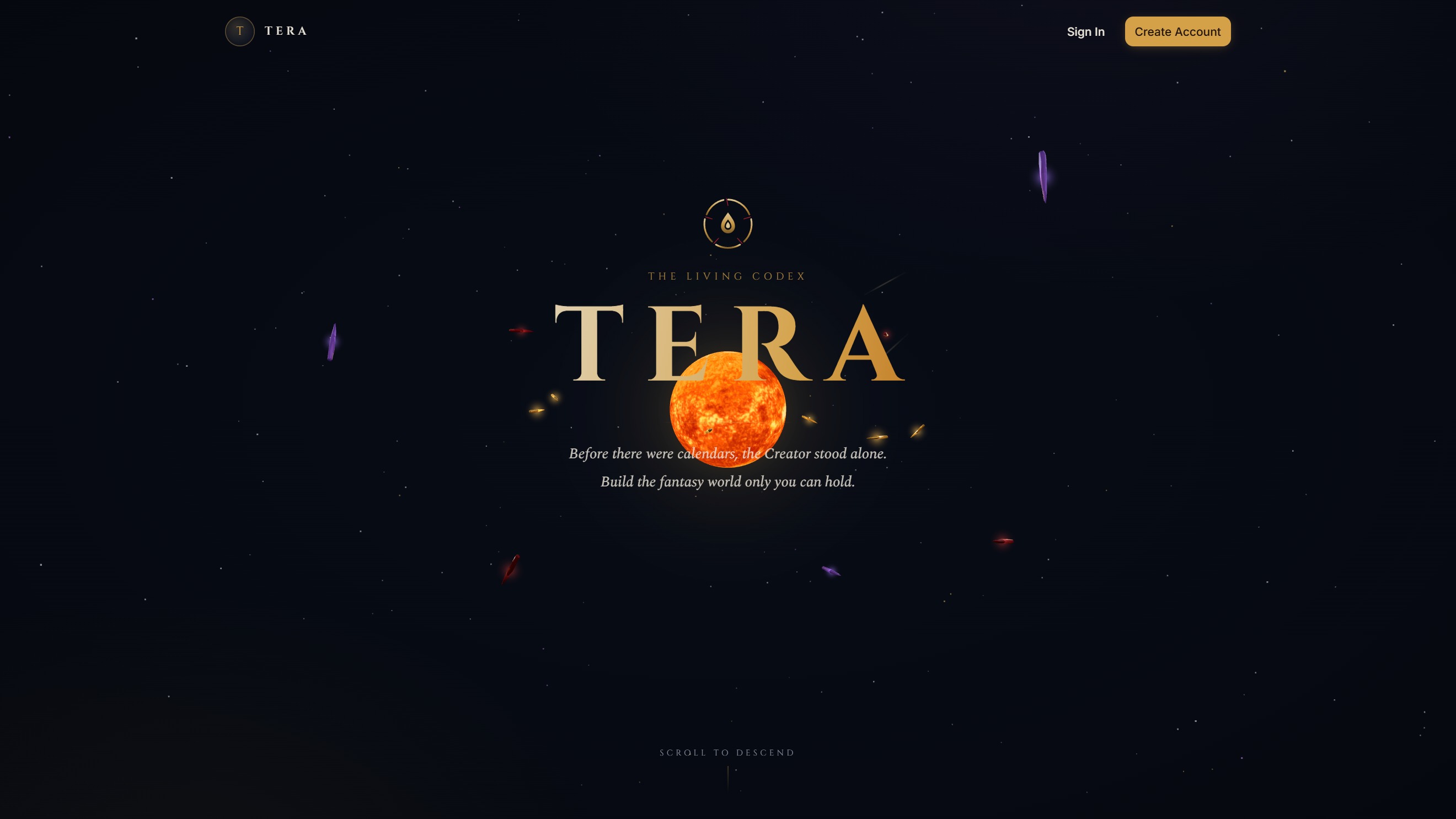
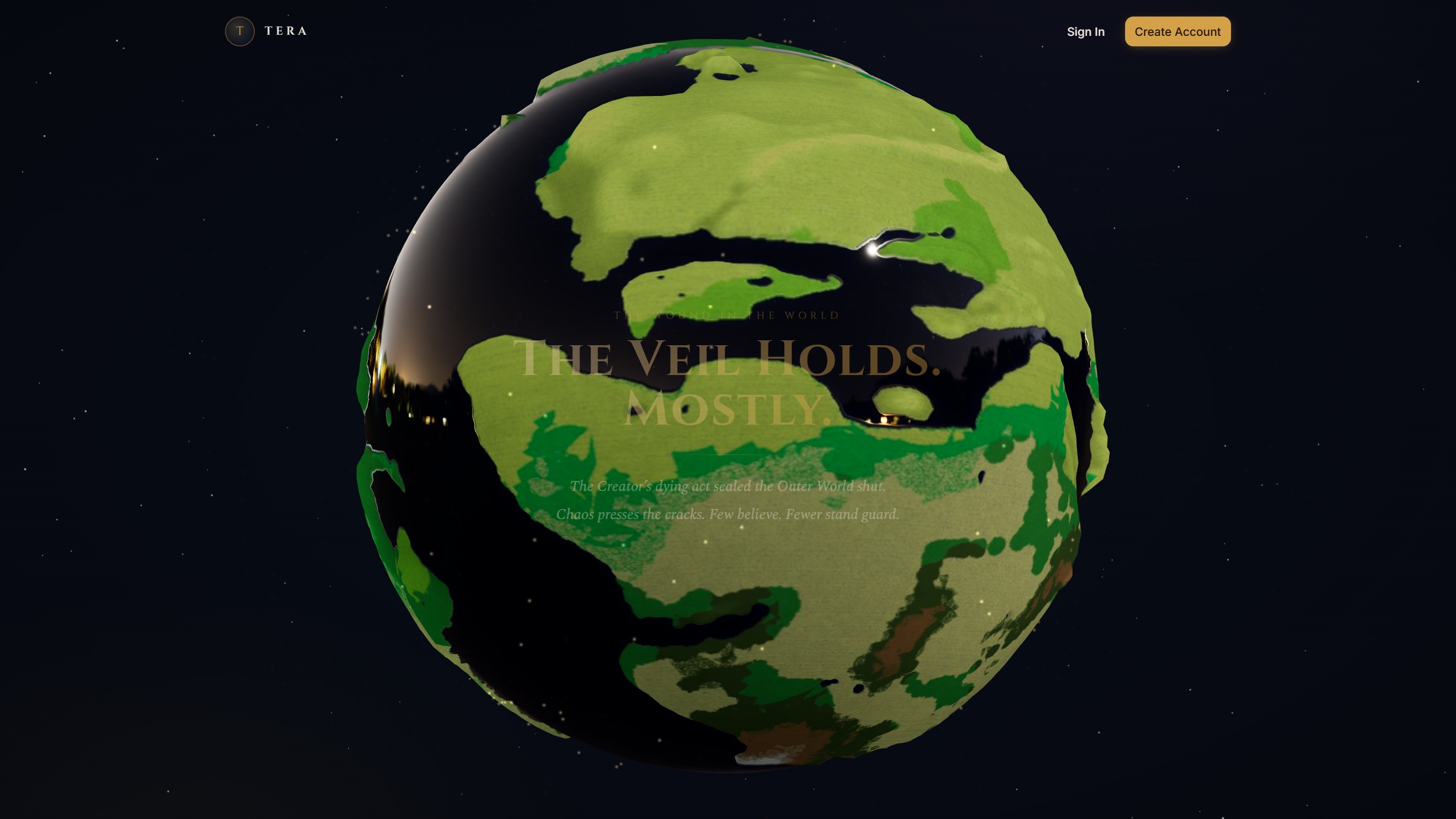
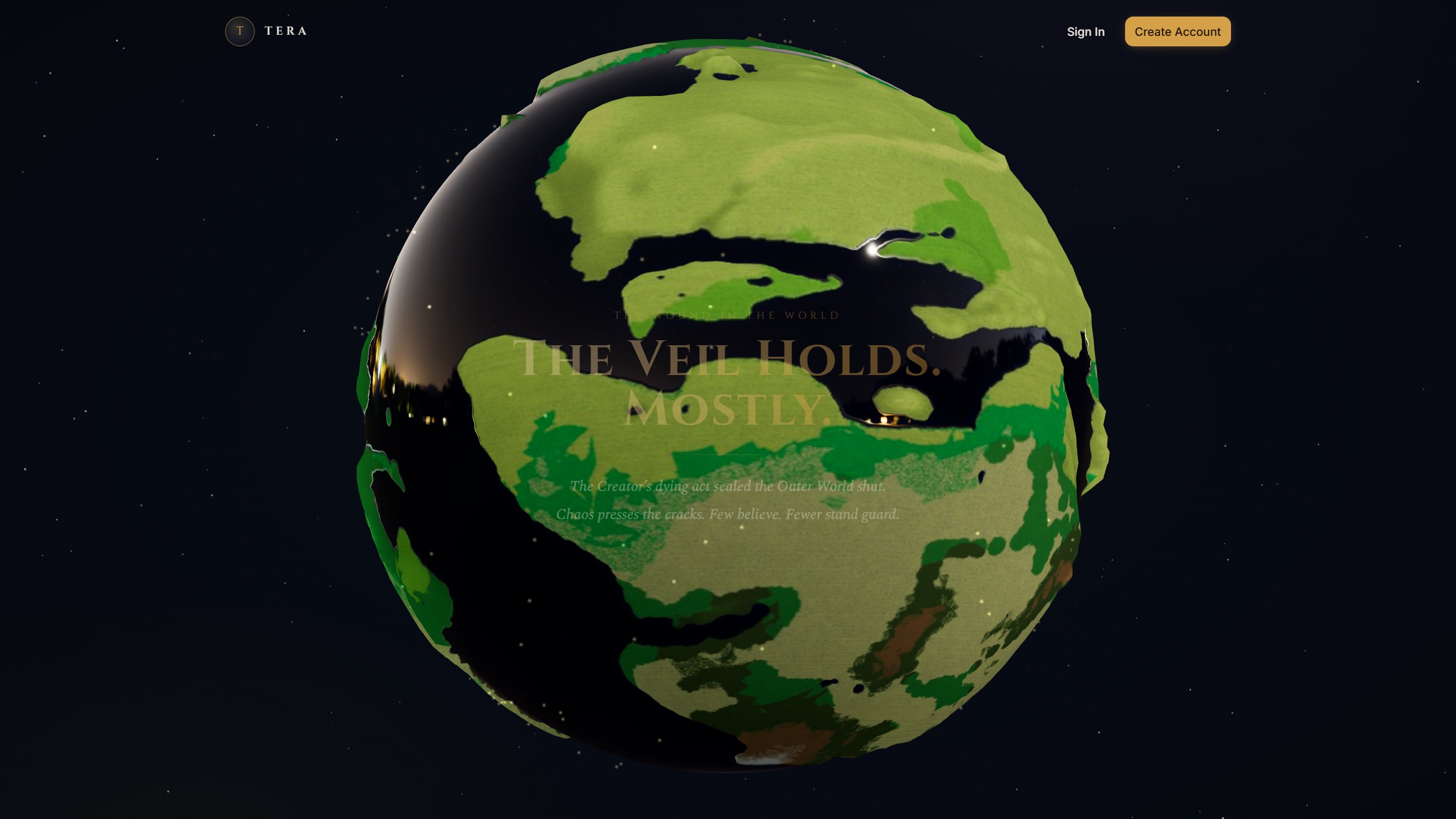
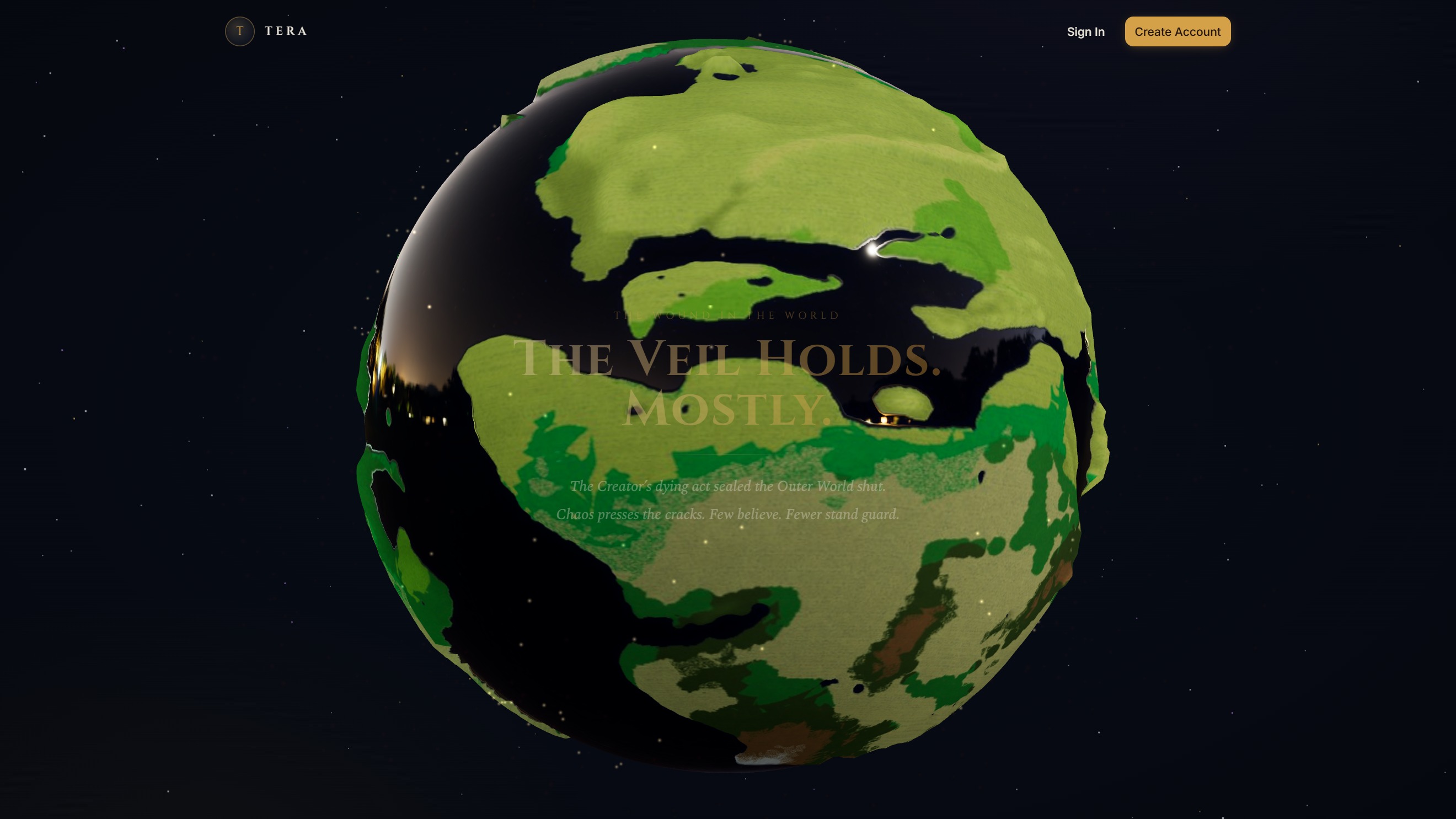
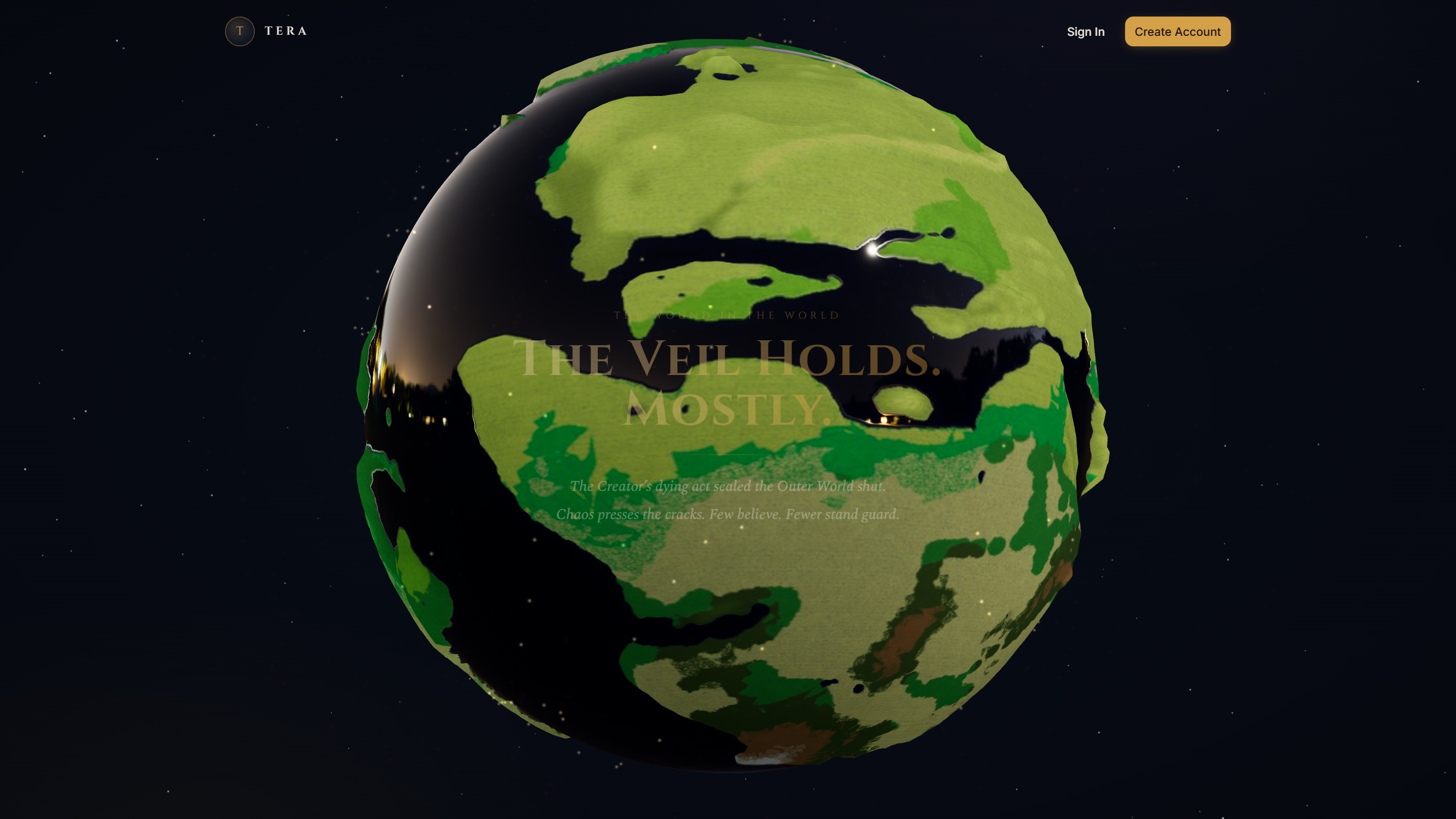
A scroll-driven WebGL landing tells the world's creation myth — molten sun, ley-field particles, and a codex aesthetic in Cinzel and gold.
From the product
Next case study
IBSAR